
U6GHz Commercial Launch in Dubai: Turning New Spectrum into Network Value
The world`s first commercial U6GHz launch ceremony took place during the 20th Telecom Review Leaders` Summit in Dubai on October 21, 2026, according to Communications Weekly. The launch marks a further step in the transition of upper 6 GHz technology from trials to commercial service.
Bringing together spectrum allocation, network deployment and device readiness, Dubai’s experience offers a useful reference for 5G-Advanced network expansion. It also raises an important question for the industry: how can additional spectrum translate into sustainable network capabilities and business value?
1, Opening Up New Capacity for Mobile Networks

U6GHz, or the upper 6 GHz band, generally refers to spectrum in the 6425–7125 MHz range. Growing demand for high-definition video, cloud services and AI applications is placing greater pressure on network capacity, uplink performance and connection reliability.
As a mid-band spectrum resource attracting increasing industry attention, U6GHz creates additional opportunities for wide-channel deployments and capacity expansion. According to the report, the Dubai deployment combines advanced antenna technologies with co-siting alongside existing C-band infrastructure, demonstrating an approach to upgrading network capabilities while making use of existing sites.
For operators, the value of a new band depends on coverage performance, deployment costs and integration with existing networks. Ultimately, performance improvements must translate into a better experience for users.
2, FWA Provides an Initial Commercial Use Case

The initial U6GHz commercial deployment prioritizes fixed wireless access (FWA), using mobile network infrastructure to deliver broadband connectivity to homes and businesses.
FWA offers a flexible access option in areas where fiber deployment is challenging or customers are geographically dispersed. Building around a clearly defined service requirement also enables operators to evaluate network performance and business models under commercial conditions.
Device availability, coverage and customer demand will all influence the pace of further deployment. The path from spectrum availability to commercial service requires coordinated progress across base stations, chipsets, customer premises equipment and the wider ecosystem.
A commercially viable network depends on the readiness of the entire value chain.
3, From Capacity Expansion to Broader Network Capabilities
Additional spectrum creates opportunities for network upgrades. Realizing those opportunities requires coordination across protocol stacks, radio equipment, network architecture, and operations and maintenance.
Different deployment environments also call for different priorities. Outdoor networks must balance coverage and capacity. Indoor hotspots need to accommodate high user densities, while enterprise and industrial private networks place greater emphasis on latency, reliability and application-specific requirements.
These diverse needs reinforce the importance of wireless solutions that support flexible deployment, customization and continued evolution.
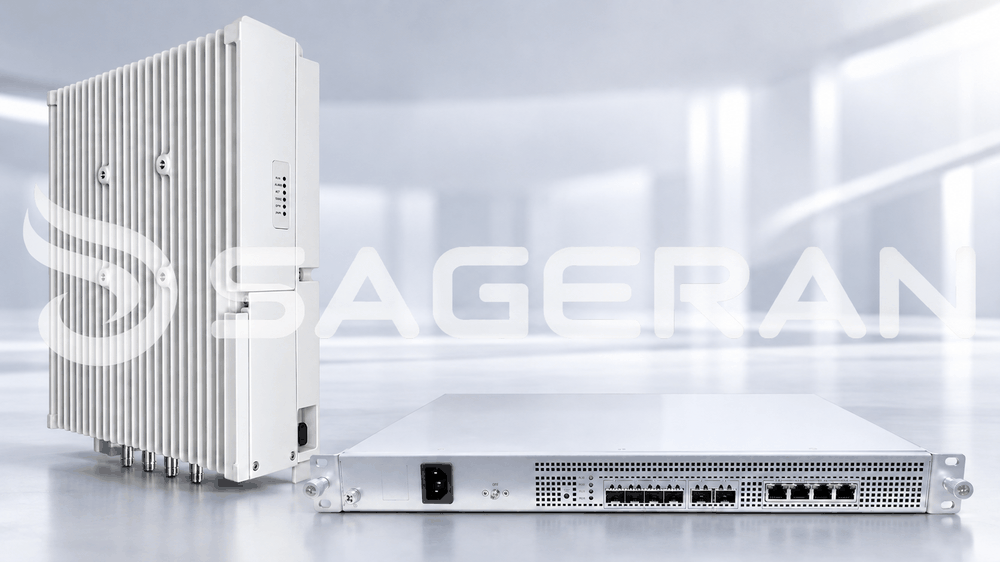
SageRAN continues to develop its mobile communications portfolio across 4G, 5G and 5G-Advanced protocol platforms and wireless coverage solutions. Its offering includes protocol stacks, distributed base stations, integrated base stations and core network solutions, addressing a broad range of deployment requirements for operators and industry customers.
Through open architectures and hardware and software customization, SageRAN helps partners improve product development and network deployment efficiency. The company is also advancing its work in edge AI and communications integration, satellite communications, and key technologies for 6G.